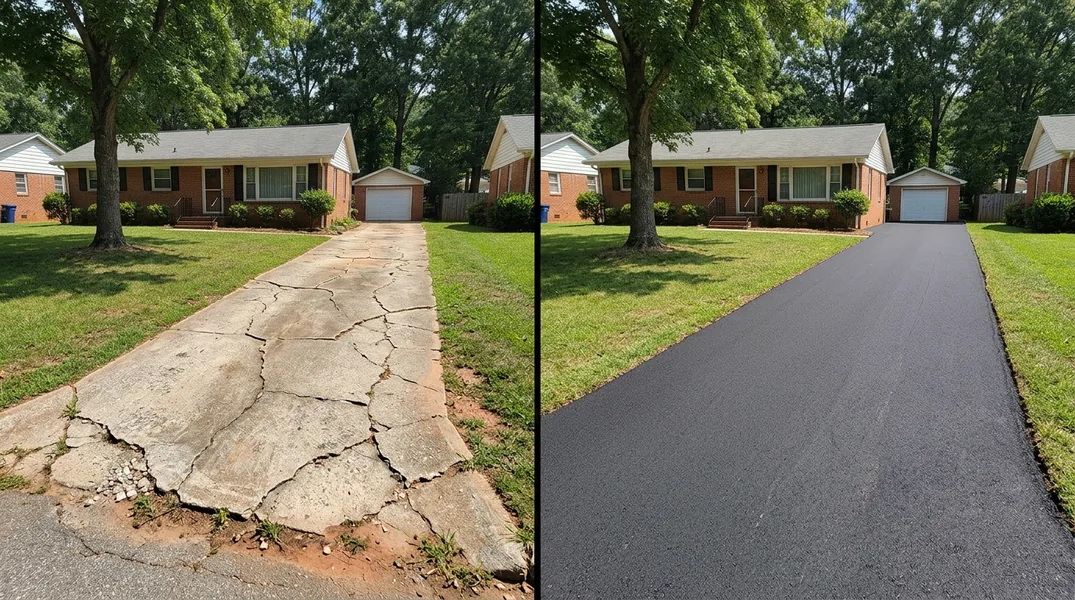
The Red Clay Problem: Why Hickory Driveways Fail Differently
If you live in Hickory and your driveway looks like it's been through a battle, you're not alone. The region's distinctive red clay soil creates conditions that accelerate asphalt deterioration in ways that homeowners in sandy-soil communities rarely experience. This isn't just about normal wear and tear. The clay beneath your driveway is actively working against it, expanding and contracting with moisture changes in ways that sandy or loamy soils simply don't.
Red clay is highly expansive when wet and shrinks dramatically when dry. During Hickory's humid summers and freeze-thaw winters, this cycle repeats constantly. The clay swells beneath your asphalt, pushing upward with tremendous force, then shrinks away, leaving voids. Your driveway sits on this unstable foundation, flexing and cracking under its own weight. Meanwhile, homeowners in areas with sandy or well-draining soils don't face this same hydraulic pressure. Their driveways settle gradually and predictably. Yours is being heaved upward by geological forces, which is why you might see sudden cracks appear overnight or large sections buckle without obvious cause.
Frost Heave Driveway Repair: The Winter Culprit You Need to Understand
One of the most destructive forces working against your driveway is frost heave. When water in the red clay soil freezes during winter months, it expands. This expansion pushes your asphalt upward, sometimes by several inches. When spring arrives and the ice melts, the soil subsides unevenly, leaving your driveway cracked, rippled, or with sections that are higher or lower than their neighbors. This cycle repeats every winter, and each cycle does more damage.
Frost heave damage looks different from regular settling. You'll notice a distinctive pattern: long cracks that follow the direction of water flow, sections that have heaved up at odd angles, or areas where the asphalt has separated from the soil beneath. These aren't cosmetic problems. Once frost heave begins, it accelerates. Water seeps into the cracks, freezes, expands further, and the cycle intensifies. Many homeowners in Hickory discover frost heave damage in March or April when the snow melts and reveals the damage from the winter season. At that point, Driveway Repair becomes urgent rather than preventative.
Pothole Repair and Asphalt Patching: Short-Term Fixes vs. Long-Term Solutions
Pothole Repair & Asphalt Patching are often the first response homeowners consider when damage appears. A pothole forms when water penetrates asphalt, weakens the base layer, and traffic breaks away chunks of the surface. In red clay regions, potholes develop faster and deeper because the unstable clay base offers less support. A simple patch might last a few months, but if the underlying clay is still heaving or settling, the patch will fail again.
This is why many homeowners find themselves calling for repairs repeatedly. They patch a pothole in spring, it returns by summer. They fill cracks in fall, new ones appear by winter. The real issue isn't the asphalt itself, it's the foundation. Patching is appropriate for isolated damage or to extend the life of a driveway that's otherwise sound. But if your driveway has multiple potholes, widespread cracking, or visible heaving, patching is applying a bandage to a deeper problem. Understanding this distinction is crucial before you decide whether to repair or replace.
Repair or Replace Asphalt Driveway: Making the Right Choice for Hickory Conditions
The decision to repair or replace your asphalt driveway depends on several factors, but in Hickory's red clay environment, it also depends on whether the underlying problem has been addressed. If your driveway is less than five years old and showing significant damage, the foundation is likely the culprit. If it's ten or fifteen years old with widespread cracking and heaving, replacement is often more economical than continued repairs.
When you replace an asphalt driveway in red clay country, proper site preparation becomes essential. This means addressing drainage issues, ensuring the base layer is compacted correctly, and sometimes installing a geotextile fabric to manage moisture movement. Asphalt Driveway Paving & Installation done correctly can last 15 to 20 years even in challenging soil conditions, but only if the foundation work is done right from the start. Cutting corners on base preparation might save money initially, but you'll pay for it in repairs within a few years.
Another option to consider is Asphalt Resurfacing & Overlay, which involves applying a new layer of asphalt over the existing surface. This works well if the base is still stable but the surface is worn. However, if frost heave or significant settling is occurring, resurfacing alone won't solve the problem. The new layer will crack and heave just like the old one did. Your contractor needs to evaluate the foundation condition before recommending this approach.
How Professional Inspection Reveals Hidden Foundation Problems
Many homeowners don't realize that surface cracks are often just the visible symptom of a deeper foundation issue. A professional inspection can identify whether your driveway problems stem from the asphalt itself, the base layer, or the soil beneath. In red clay areas, this distinction matters enormously because it determines whether a simple repair will work or if you're looking at a larger project.
During an inspection, a contractor will look for patterns in cracking, evidence of heaving or settling, drainage problems, and the overall condition of the base layer. They'll assess how water is moving beneath and around your driveway. In red clay soil, water management is often the key to preventing future problems. Poor drainage that allows water to accumulate under your driveway accelerates clay expansion and frost heave. A professional can identify these issues and recommend solutions, whether that's improving grading, installing drainage, or replacing the entire driveway with proper site preparation.
What to Budget: Asphalt Driveway Paving & Installation Cost in Hickory
Understanding the pricing for driveway work in Hickory helps you make informed decisions. Pothole repair and patching are the least expensive options, typically ranging from a few hundred dollars for isolated damage to a few thousand for multiple repairs. However, as mentioned, these are often temporary solutions in red clay country. Asphalt resurfacing costs more, usually $2 to $5 per square foot depending on the thickness and condition of the existing surface. A full replacement, which includes proper site preparation and base work, typically costs $3 to $7 per square foot.
The investment in proper base preparation and drainage during a replacement might add to the upfront cost, but it significantly extends the life of your new driveway. A driveway installed on a poorly prepared red clay foundation might fail within five years. The same driveway, installed with proper grading, drainage, and base materials, could last 15 to 20 years. When you calculate the long-term cost, proper installation is the smarter investment. If you're unsure about the condition of your driveway or whether repair or replacement makes sense for your situation, contact Hickory Asphalt Paving at (828) 624-5674 for a free estimate. We'll evaluate your specific situation and recommend the most cost-effective solution for your red clay conditions.
Looking for a professional asphalt paving contractor in Hickory? Hickory Asphalt Paving responds fast for all your asphalt paving needs.
Get a Free Quote